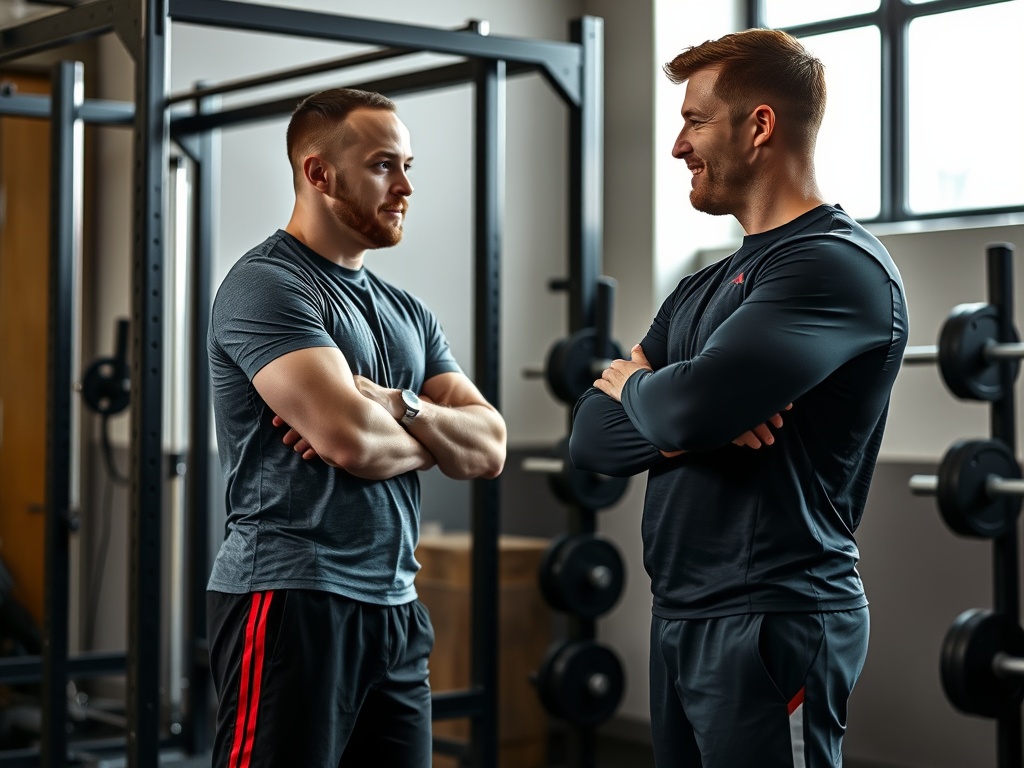

The most useful conversation with a trainer is specific: explain what movement or situation is difficult, what you feel, what has already been medically evaluated, and what outcome you still want from the session. A good modification changes the exercise while preserving the training goal whenever possible.
TL;DR: Tell the trainer what you need before the hard part of the session starts. Describe symptoms or limitations without asking the trainer to diagnose them, share relevant healthcare guidance, agree on acceptable substitutions, and speak up if a modification still does not feel right.
Modifications Are Part of Good Programming
A modification can change range of motion, load, tempo, position, equipment, impact, balance demand, or exercise selection. The purpose is not simply to make training “easier.” It is to match the task to the person while keeping the intended adaptation where practical.
Professional scope matters. Personal trainers are generally qualified to design and modify exercise programs, coach technique, and work within fitness goals, but diagnosis and treatment of medical conditions or injuries belong with licensed healthcare professionals. NASM’s current scope-focused guidance states that trainers make exercise decisions rather than medical diagnoses and should refer when a response falls outside what can be addressed through program adjustment. See its corrective exercise red-flags guidance.
That creates a useful division of labor: you bring accurate information and boundaries; the trainer changes the exercise plan within their scope.
Start the Conversation Before the Session
Do not wait until you are under a bar or halfway through a circuit. A short conversation at the beginning gives the trainer time to choose alternatives and adjust the session flow.
Use plain language:
- “Deep knee flexion is uncomfortable today, but walking and shallow squats feel fine.”
- “My clinician asked me to avoid loaded overhead work for now.”
- “I get dizzy when I move quickly from the floor to standing.”
- “High-impact jumping is not tolerable, but cycling is comfortable.”
- “I can train hard, but I need more setup time and a stable support for balance.”
You do not need to provide every detail of your medical history. Share what is relevant to safe exercise selection, especially any restrictions or recommendations from a qualified clinician.
Separate the Goal From the Exercise
People often become attached to one exercise when the real goal is broader. If the goal is lower-body strength, a back squat is one option, not the goal itself. If the goal is aerobic conditioning, running is one method, not the only method.
Ask the trainer, “What is this exercise trying to train?” Then choose a substitution that preserves that purpose.
| Original task | Main training goal | Possible modification |
|---|---|---|
| Back squat | Lower-body strength | Box squat, split squat, leg press, adjusted range |
| Push-up | Horizontal pressing | Incline push-up, machine press, dumbbell press |
| Running intervals | Aerobic/anaerobic conditioning | Bike, rower, incline walk, reduced-impact intervals |
| Overhead press | Vertical pressing/shoulder strength | Landmine press or other tolerated press pattern |
| Floor core drill | Trunk control | Standing cable or supported anti-rotation drill |
The exact substitute should be based on your tolerance, goals, equipment, and any medical guidance you have received.
Give the Trainer Useful Feedback During the Movement
“Good” and “bad” are vague. More useful feedback describes location, quality, timing, and change.
Examples:
- “That feels fine at the top, but pinches near the bottom.”
- “The first set was comfortable; the sensation increased on the second.”
- “I feel muscle effort in the target area, but no joint pain.”
- “This version is stable, but I am holding my breath because the setup feels rushed.”
A trainer can change one variable at a time: load, range, stance, support, tempo, or exercise. That makes it easier to learn what improves the movement.

Know When the Trainer Should Refer Out
A trainer should not diagnose persistent pain, prescribe medical treatment, or tell you to ignore symptoms that may require clinical evaluation. NASM’s guidance on a trainer’s “circle of care” emphasizes referring clients to physicians, physical therapists, dietitians, and other qualified professionals when issues fall outside fitness scope. See NASM’s overview of the trainer’s role in a circle of care.
Referral is especially reasonable when symptoms are new, worsening, unexplained, or associated with red flags such as fainting, chest pain, significant shortness of breath outside expected exertion, neurological symptoms, or an acute injury. Follow appropriate medical advice rather than trying a sequence of random gym modifications.
If you are returning after clinical care, bring the trainer the restrictions or progression guidance you were given. A clear “avoid this for four weeks, but these movements are allowed” is easier to program around than “my shoulder is bad.”
Ask for a Modification Menu Before You Need It
If you have a recurring limitation, create a short list of acceptable substitutions with the trainer. This is especially useful in group classes, travel, or days when symptoms vary.
For example:
- Primary squat pattern.
- Reduced-range squat option.
- Supported unilateral option.
- Machine option.
- Low-demand fallback if symptoms are elevated.
That menu reduces the need to renegotiate the entire workout each time. If low motivation is part of a difficult day, a familiar cue such as music may help with session engagement, but it should not override the agreed modification. The evidence-focused guide to workout music, motivation, and performance explains that distinction.
If Symptoms Vary, Agree on a Readiness Rule
Some limitations are not constant. Menstrual symptoms, sleep, migraine, arthritis, fatigue, or recovery from a flare can change from one session to the next. Decide how you will scale training before the warm-up.
A simple rule might be:
- Normal symptoms: planned session.
- Noticeable but manageable symptoms: reduce volume or choose a familiar modification.
- Severe or unusual symptoms: stop and seek appropriate care.
For menstrual-cycle-related changes specifically, training readiness and menstrual symptoms explains why symptom severity is more useful than assuming every cycle phase needs the same modification.
Warning Signs in the Coaching Relationship
A modification conversation should make you more informed and safer, not pressured. Be cautious if a trainer:
- Dismisses pain or tells you it is always normal.
- Claims to diagnose an injury without appropriate licensure.
- Overrides explicit medical restrictions without coordinating with the clinician.
- Treats every modification as a weakness or lack of commitment.
- Refuses to explain the purpose of an exercise or substitution.
- Pushes repeated high-risk attempts after your technique or symptoms deteriorate.
Good coaching can still be challenging. The difference is that challenge is purposeful and responsive to feedback.
Make Modification Part of the Coaching Conversation
Before your next session, write one sentence that describes the limitation and one sentence that describes the training goal you still want to pursue. Share both with the trainer before the workout starts.
Then agree on one primary modification and one fallback. This keeps the session focused on what you can train safely and effectively instead of turning a limitation into the entire identity of the workout.
Create a photorealistic editorial photograph of a trainer helping an adult client set up a supported split squat variation using a stable rail, captured from a three-quarter rear angle with careful coaching body language, soft ambient gym light, realistic equipment and skin textures, documentary composition similar to The Wall Street Journal, no direct eye contact, no pointing-at-screen cliché, no readable text, no logos, no watermarks, no brand names, anatomically correct hands and fingers, no harsh flash, no HDR, no oversaturation, no CGI sheen.