
To prepare audition materials well, choose pieces that fit the audition requirements, show range without overreaching, and are rehearsed enough to stay clear under pressure. Your package should usually include a resume, headshot, selected monologue or song cuts, marked music if needed, and clean digital files for prescreens.
Audition-Ready Brief: A strong audition package is organized, rule-compliant, and specific. It should help the panel understand who you are as a performer before you enter the room or upload the first video.
Start With the Requirements, Not Your Favorite Piece
The most common audition mistake is choosing material first and reading the requirements second. Theater schools, community theaters, musical theater programs, and festivals often ask for different lengths, genres, file formats, slate instructions, accompaniment rules, or resume details.
Some programs are very specific. Carnegie Mellon School of Drama, for example, describes undergraduate audition materials such as resumes, headshots, and monologue expectations on its admission page. Musical theater applicants may also encounter the Musical Theater Common Prescreen, which standardizes some prescreen criteria across participating institutions while still allowing individual schools to add requirements.
Before choosing anything, create a checklist from the exact audition notice. Mark what is required, optional, forbidden, and due. If you are auditioning for both theater school and a community production, make two checklists. Do not assume the same materials work everywhere.
Build a Resume That Reads Cleanly in One Minute
A performer resume should be easy to scan. Put your name and contact information at the top. Include performance credits, training, special skills, vocal range if relevant, and education or workshops that support the audition. Beginners can include school productions, community performances, workshops, choir, dance training, speech competitions, or backstage experience if it helps show commitment.
Avoid inflating credits. A small role listed honestly is stronger than a vague credit that sounds bigger than it was. Do not include personal details that were not requested. If the audition notice asks for a one-page resume, keep it to one page.
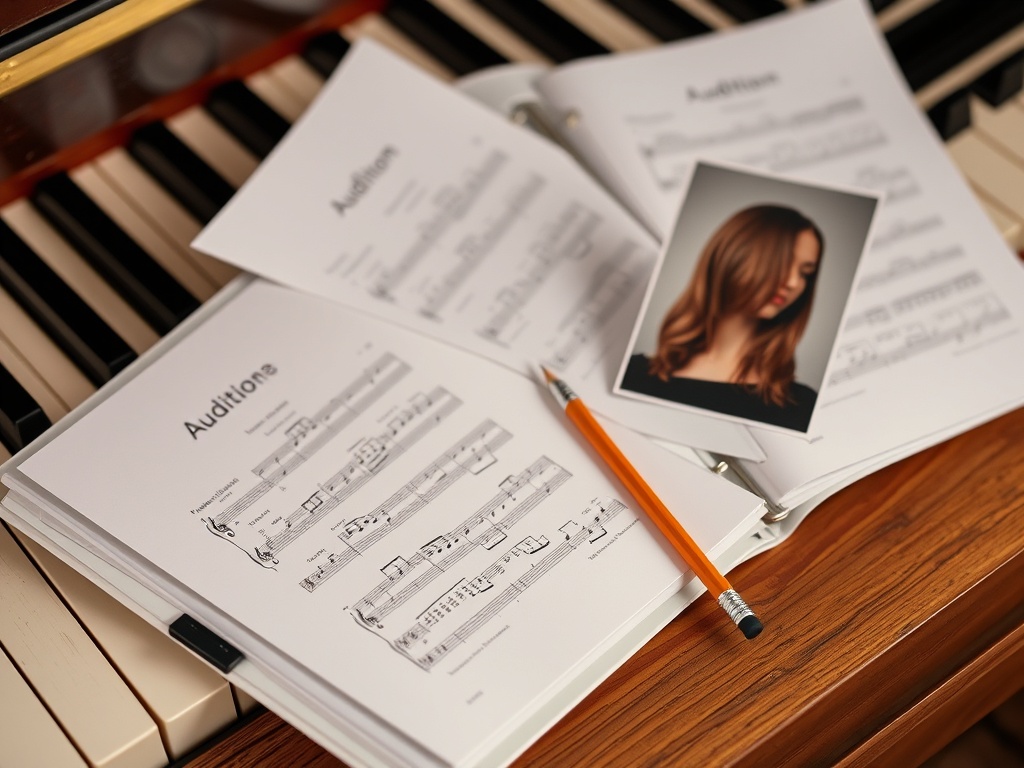
A headshot should look like you now. It does not need luxury styling for a community production, but it should be clear, well lit, and free of distracting edits. The purpose is recognition, not glamour.
Choose Monologues With Contrast and Fit
For acting auditions, contrast usually means more than “one funny and one serious.” It can mean classical and contemporary, heightened and conversational, restrained and emotionally open, active and reflective. The pieces should show different aspects of your instrument without making you look like two unrelated performers.
Choose published plays unless the instructions allow original material. Avoid monologues from films, viral speeches, or heavily overused audition pieces unless they are specifically acceptable. Make sure the character’s age, situation, and language are playable for you. You do not need to match the character exactly, but the piece should let you act truthfully.
The National Association of Teachers of Singing shows how carefully repertoire categories can be defined in formal auditions through its National Student Auditions resources. Even if you are not entering a singing competition, the principle applies: rules exist to compare performers fairly and to keep the process organized.
Prepare Song Cuts Like a Collaborator
For musical theater auditions, the pianist or accompanist is your partner. Your sheet music should be clean, legible, and clearly marked. Indicate the start, end, tempo, cuts, repeats, and any important ritardando or fermata. Tape or bind pages so they turn easily. Do not hand someone loose pages in the wrong order.
For recorded prescreens, check framing, lighting, audio, and background. A simple neutral setup is better than an overdesigned one. Do not let the room compete with the performance. Slate exactly as requested and trim files only as allowed.
Match Your Material to the Opportunity
A theater school audition often asks, “What is your training potential?” A community production audition often asks, “Can you serve this show?” The difference matters.
| Audition type | What panels often need to see | Material strategy |
|---|---|---|
| Theater school | Range, openness, teachability, preparation | Choose pieces that show truthful acting and growth potential. |
| Community play | Fit for roles, reliability, ensemble awareness | Choose material close enough to the show’s tone. |
| Musical theater program | Acting through song, vocal health, movement readiness | Pick cuts that tell a playable story. |
| Festival or showcase | Clarity, confidence, audience connection | Favor concise pieces with strong beginnings and endings. |
If you are preparing for a stage opportunity tied to a larger arts community, remember that presentation is part of the culture. The same attention to audience experience seen in premium theaters and event cinema also matters in smaller rooms: people respond to preparation they can trust.
Rehearse the Logistics, Not Only the Acting
Practice entering, slating, taking a breath, beginning, ending, and recovering if something goes wrong. If you are using a chair, rehearse with and without it. If you sing, rehearse your tempo conversation with the accompanist. If you submit video, test audio levels before the final recording day.
Record yourself once for technical review and once for performance review. In the technical review, look for framing, volume, background noise, and file quality. In the performance review, ask whether the piece has an objective, a listener, and a change. Do not record endlessly. Too many takes can make the work stiff.
When DIY Preparation Is Enough, and When to Get Help
DIY works well when the audition is low-stakes, the requirements are simple, and you already understand the material. Get help when you are preparing for competitive programs, singing with difficult cuts, filming prescreens, or choosing classical text. A coach, teacher, music director, or experienced actor can help you avoid mismatched material.
Help does not mean outsourcing your personality. The best coaching makes your choices clearer, not generic. If every gesture and pause feels borrowed, the panel may see technique but not you.
How to Know Your Package Is Ready
Your materials are ready when they meet every instruction, fit within the time limit, open cleanly, and still work after a mistake. Ask yourself: Can I explain why I chose this piece? Can I perform it without apologizing? Are my files named clearly? Do my resume and headshot match the audition context? Have I checked the upload deadline and format?
For performers who also enjoy long-form artistic structure, audition preparation has something in common with album sequencing. Each piece should show something specific while belonging to a coherent package. That idea also appears in the guide to what makes a great concept album hold together.
Your Final Walkthrough Before Submission
Do one last review from the panel’s point of view. Open every file. Read every label. Time every piece. Print or save backups. Then stop tinkering early enough to rest. Audition panels are not looking for a flawless machine. They are looking for a prepared performer who can listen, adjust, and bring the material to life.