
To reduce bugs around outdoor seating, remove standing water, clean up food and drink residue, manage trash, adjust lighting, improve screens and physical barriers, and target the specific insect rather than spraying the entire patio. Mosquitoes, flies, moths, ants, wasps, and beetles respond to different conditions, so identification matters.
TL;DR: Begin with the patio’s attractants: water, food, light, shelter, and access. Empty water-holding containers weekly, keep trash covered, clean spills promptly, use lighting that attracts fewer night-flying insects, repair screens, and use EPA-registered repellents or pesticides only as directed when needed. Yellow “bug” lights can attract fewer insects but do not repel mosquitoes.
Step 1: Identify Which Bug Is Ruining the Seating Area
A patio can host many insects at once, but the control strategy depends on which one is creating the problem. Mosquitoes breed in water. House flies and some wasps are drawn to food and garbage. Moths and beetles may gather around lights. Ants follow food trails and nest in nearby soil or structural gaps.
Spend a few minutes observing before changing anything. Note the time of day, weather, where insects collect, and whether they are biting, landing on food, circling lights, or emerging from a crack. A phone photo can help with identification later.
Avoid treating harmless insects simply because they are present outdoors. Some beetles, moths, flies, and wasps contribute to decomposition, predation, or pollination. The goal is a more comfortable seating zone, not an insect-free yard.
Step 2: Remove Standing Water First
For mosquito problems, water management is the highest-priority household step. CDC mosquito-control guidance recommends emptying and scrubbing, turning over, covering, or discarding items that hold water at least weekly. Check flowerpot saucers, buckets, toys, tarps, clogged gutters, wheelbarrows, pet bowls, furniture covers, and small depressions in stored items.
Rain barrels and other water-storage containers should be tightly covered or screened so mosquitoes cannot enter. Water features that cannot be emptied may need circulation, fish where appropriate, or a larvicide specifically labeled for that use. Follow the product label and local mosquito-control guidance.
Do the water check beyond the patio itself. A forgotten bucket behind the shed can produce mosquitoes that end up at the table.
Step 3: Make Food and Trash Less Available
Wipe tables after meals, rinse sticky drink spills, and bring serving dishes indoors when the meal is finished. Keep garbage and recycling containers closed. Rinse beverage containers before storing them for recycling if they attract wasps or flies.
Pick up fallen fruit near seating areas. Clean grills and grease trays according to the manufacturer’s instructions. Pet food should not remain outside longer than necessary. These steps are ordinary sanitation, but they remove resources that keep insects returning to the same location.
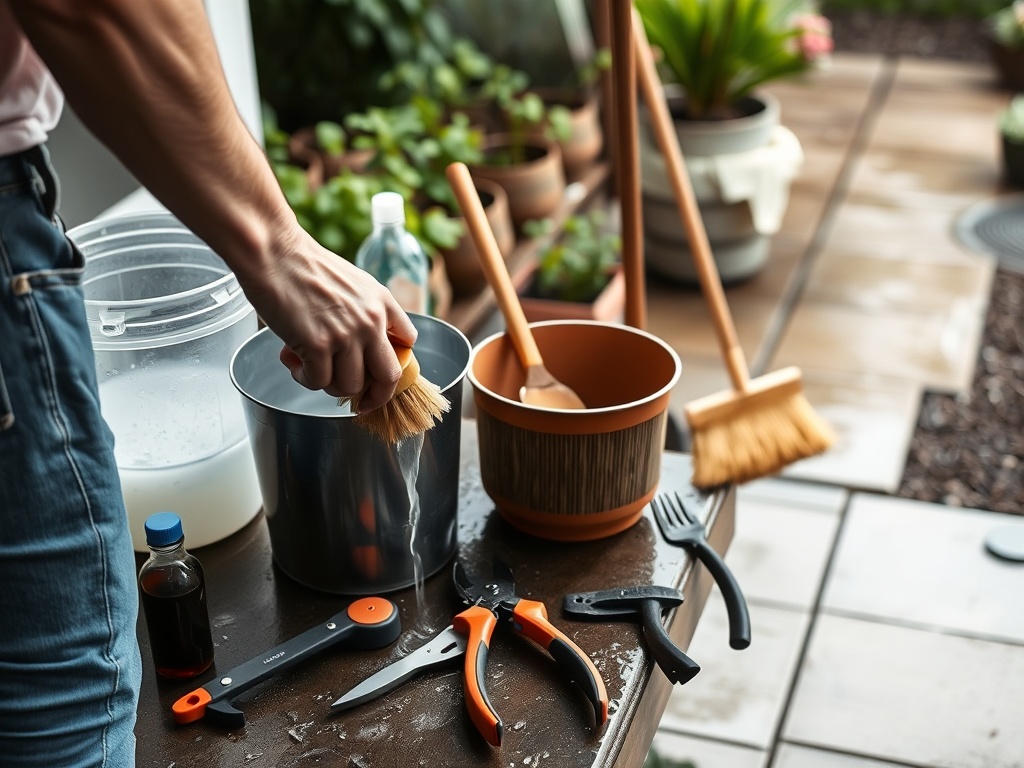
The article on green cleaning for outdoor surfaces and tools explains how to clean patios and furniture without turning routine cleanup into unnecessary chemical runoff.
Step 4: Change the Lighting Strategy
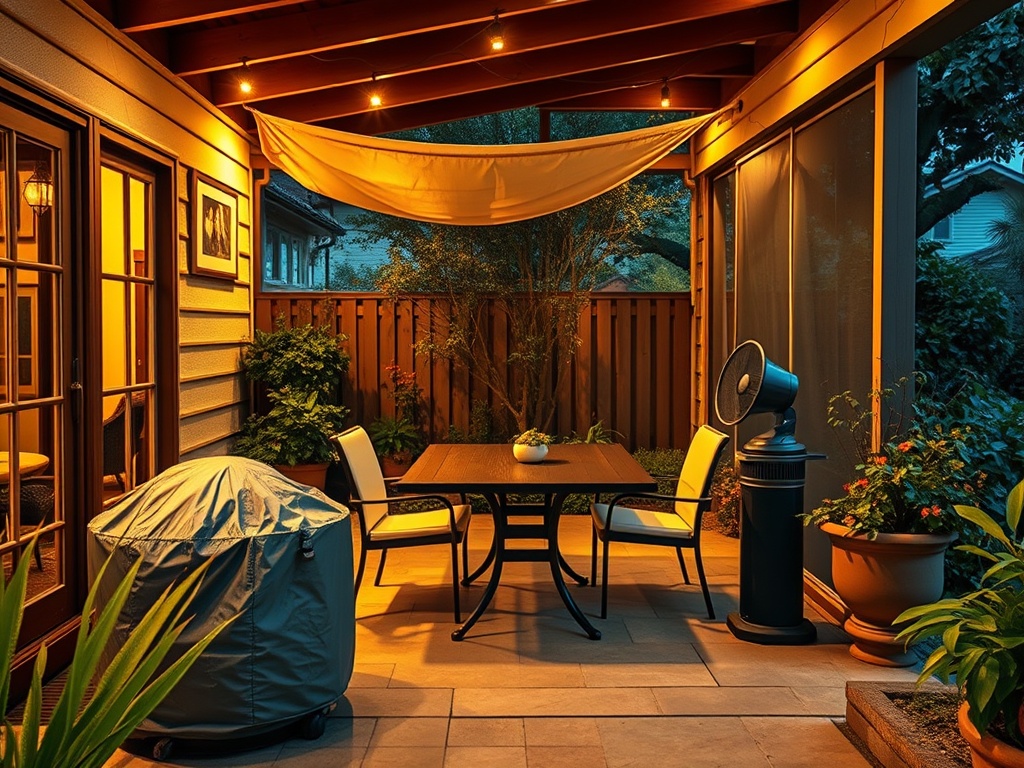
Bright white outdoor lights can attract many night-flying insects. Turn off unnecessary lights, move lighting away from the seating zone when practical, and consider warmer or yellow-toned bulbs for fixtures where insect attraction is a recurring problem.
Penn State Extension notes that yellow “bug” lights can attract fewer insects. They do not create an invisible barrier, and they do not repel mosquitoes. The goal is to reduce the visual attraction of the fixture, not to claim the bulb is an insecticide.
Motion sensors and timers can also reduce the hours that lights operate. Shield fixtures so light falls where people need it rather than spilling across vegetation and walls.

Step 5: Use Air Movement for Mosquito Comfort
Mosquitoes are relatively weak fliers in moving air. A portable fan can make a seating zone less comfortable for them while also improving human comfort on warm evenings. Position electrical equipment on a stable, dry surface and use outdoor-rated devices and outlets where required.
Air movement is a comfort measure, not a breeding-control strategy. Continue eliminating standing water because a fan only affects the immediate occupied area.
Step 6: Improve Screens and Physical Barriers
For porches, repair torn screens, close gaps around doors, and inspect the lower edges where insects enter. Use door sweeps or weatherstripping where appropriate. Keep screen doors closed rather than propped open during evening gatherings.
For food, mesh covers can protect serving dishes without chemicals. Tabletop covers are especially useful when flies or wasps are intermittent rather than severe enough to justify treatment.
Step 7: Manage Vegetation Without Stripping the Yard
Dense vegetation touching the patio can provide shaded resting areas for some insects, while flowering plants naturally attract pollinators. You do not need to remove every plant. Prune overgrown growth for access and airflow, remove decaying fruit and plant material, and keep mulch from piling against structural openings.
If a shrub blooms heavily and attracts bees, relocating the chair may be easier than treating the shrub. Pollinator activity is often seasonal and concentrated around flowers. Create a little distance between the busiest blooms and the dining table.
If you are planning a broader water-wise landscape, the xeriscaping guide can help organize plant zones and irrigation so the patio does not sit beside chronically wet planting beds.
Step 8: Use Repellents and Pesticides Deliberately
For mosquito bites, EPA-registered personal repellents can be useful when used according to the label. Choose a product appropriate for the user and situation and follow application directions. Do not apply more often than directed.
Outdoor insecticides may have a role when a specific pest is identified and nonchemical steps are not enough. Avoid routine blanket spraying simply because insects are visible. Read labels for target pests, application sites, weather restrictions, pollinator precautions, children and pet restrictions, and reentry directions.
The pest-control mistakes guide explains why identification, thresholds, and targeted treatment are central to a safer IPM approach.
Common Patio Bug Fixes That Do Not Live Up to the Hype
A yellow light may attract fewer insects, but it does not repel mosquitoes. Scented plants may smell pleasant and have culinary value, but merely placing a potted herb on the table should not be treated as reliable mosquito protection. Ultrasonic devices have not earned a place in a practical control plan simply because they are chemical-free.
Bug zappers also kill many insects that are not the biting mosquitoes people intended to target. If mosquitoes are the concern, focus first on breeding water, barriers, personal protection, and targeted local mosquito-control recommendations.
A 15-Minute Pre-Gathering Routine
Walk the seating area and empty small water accumulations. Wipe the table, close trash lids, clean visible food residue, and move pet bowls. Turn off unnecessary bright lights and switch on a fan if mosquitoes are active. Check screens and bring food covers outside.
If stinging insects are repeatedly entering the area, watch where they travel instead of searching blindly for a nest. Do not block an active wasp or hornet nest entrance or attempt risky nest treatment near occupied spaces. A licensed pest professional may be appropriate when a nest presents a sting hazard.
Keep the Patio Comfortable Without Treating the Whole Yard
The most durable bug reduction comes from changing the small conditions that repeatedly attract or produce insects. Water, food, light, shelter, and access can all be managed at the seating zone. Use chemical control only when the pest and need are clear, and keep beneficial insects outside the target whenever possible.
Home and garden information is provided for general educational purposes and is not a substitute for medical, pest-control, electrical, or legal advice. Follow pesticide and repellent labels, local mosquito-control guidance, and electrical safety requirements.[/