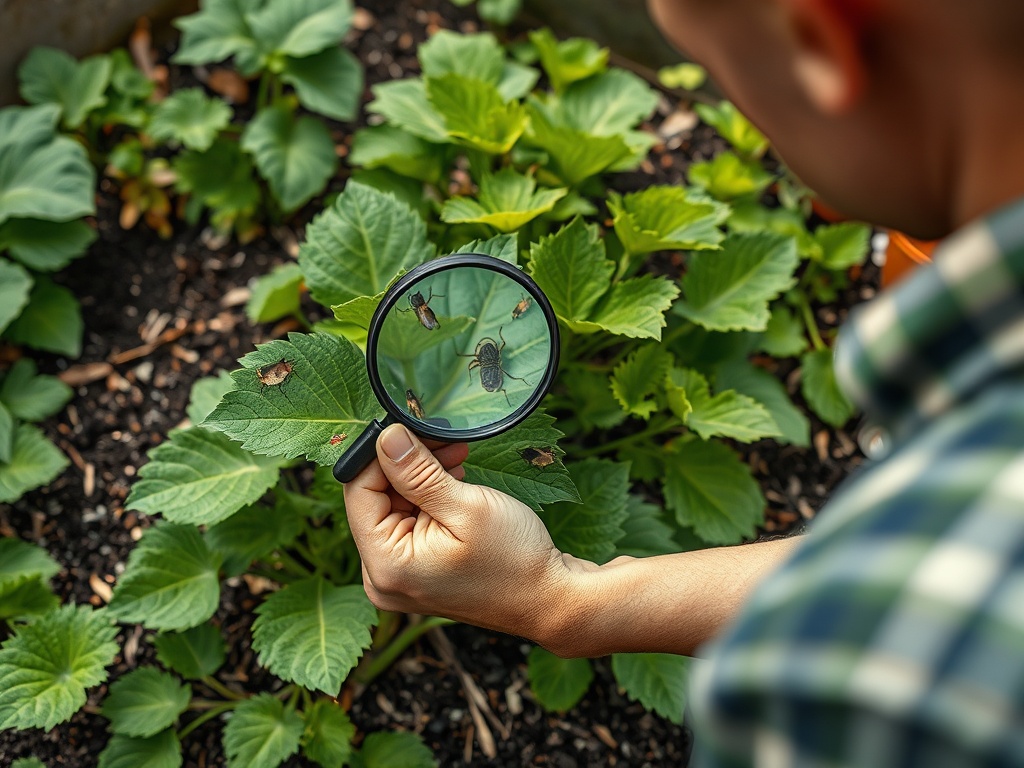

The biggest garden pest-control mistakes usually happen before a product is applied: misidentifying the problem, treating harmless or beneficial organisms as pests, ignoring plant stress, and choosing a broad control before deciding whether control is needed at all. A better approach is to identify, monitor, prevent, and then use the least disruptive effective method.
TL;DR: Do not spray first and diagnose later. Confirm the pest, decide whether the damage justifies action, correct cultural problems, protect beneficial insects, read the entire pesticide label, and monitor after treatment. “More” is not better with pesticides, and a product that is not labeled for the target pest or site should not be used there.
Mistake 1: Treating Symptoms Instead of Identifying the Cause
Holes, yellow leaves, wilting, distorted growth, and brown patches can come from insects, disease, drought, overwatering, nutrient problems, weather, physical damage, or herbicide injury. Reaching for an insecticide because a leaf is damaged can miss the real cause.
Start by inspecting the whole plant. Look at new and old leaves, stems, leaf undersides, roots when practical, and nearby plants. Note when symptoms started and whether they follow a pattern. Photograph insects rather than crushing them immediately; the insect on the plant may be a predator feeding on the actual pest.
UC Integrated Pest Management advises identifying the organism and confirming that a pest is truly responsible before selecting a pesticide. If you cannot identify the problem, local extension offices and plant diagnostic clinics can often help from photos or samples.
Mistake 2: Assuming Every Insect Is Harmful
Gardens contain pollinators, predators, parasitoids, decomposers, and temporary visitors along with pests. Lady beetles, lacewings, many wasps, spiders, and predatory bugs can suppress plant-feeding insects. A broad-spectrum spray can remove these helpers and leave the garden more vulnerable later.
Tolerance is part of pest management. A few chewed leaves on an established plant may be cosmetic rather than a threat to plant health. Decide what level of damage you can accept before treating. That decision is sometimes called an action threshold.
The EPA describes integrated pest management, or IPM, as a strategy that combines prevention, monitoring, identification, and appropriate controls while minimizing hazards. Home gardeners can use the same framework without turning the garden into a laboratory.
Mistake 3: Ignoring the Conditions That Favor the Pest
Aphids on soft, overfertilized growth, fungus problems in persistently wet foliage, slugs in damp hiding places, or mosquitoes breeding in containers all have environmental components. A pesticide may reduce the current population, but the same issue can return if the habitat remains unchanged.
Check irrigation, drainage, plant spacing, mulch depth, weeds, fallen fruit, dense debris, and plant vigor. Sometimes pruning for airflow, correcting watering, removing infested plant parts, or changing sanitation practices reduces the pressure enough that a chemical treatment is unnecessary.
Mistake 4: Using the Broadest Product First
A product that kills many insects may also affect beneficial insects. Whenever practical, begin with physical, cultural, mechanical, or highly targeted controls. Hand-picking, a strong stream of water on sturdy plants, pruning a localized infestation, traps, barriers, and row covers can be effective depending on the pest.
If a pesticide is needed, choose one labeled for the pest and site and consider the least disruptive effective option. “Organic” does not automatically mean harmless to pollinators, people, pets, or aquatic life. Active ingredient, formulation, timing, dose, exposure, and label restrictions all matter.

Mistake 5: Thinking Twice the Dose Will Work Twice as Well
Pesticide labels are legal use directions in the United States and provide application rates, target sites, personal protective equipment, reentry information, environmental precautions, and other restrictions. Exceeding the rate can injure plants, increase exposure, contaminate surfaces, and create runoff without improving control.
Measure carefully. Use equipment intended for the product, mix only the amount needed, and do not combine products unless the labels allow that use. Never transfer pesticides into food or beverage containers. Store them in the original container with the label intact and away from children and pets.
Mistake 6: Spraying at the Wrong Time
Timing can determine whether a treatment reaches the vulnerable life stage. Some insects are protected inside leaves, stems, soil, scales, or egg cases for part of their life cycle. Spraying adults may do little if the damaging stage is elsewhere.
Weather also matters. Wind can move spray away from the target, and heavy rain can wash products from surfaces or increase runoff. Heat can increase the risk of plant injury with certain products. Follow label restrictions and local guidance rather than using a generic “spray every Saturday” routine.
Mistake 7: Treating the Whole Yard for a Small Problem
Spot treatment often makes more sense when a pest is limited to one plant or bed. Blanket applications increase the treated area and can expose organisms that were not part of the problem.
Mark affected plants, inspect nearby hosts, and determine whether the infestation is expanding. If only a few shoots are affected, pruning or localized treatment may be enough. Continue monitoring instead of assuming the first treatment solved the problem permanently.
If the issue is indoors, the article on shelf plants for living rooms includes placement and watering considerations that can prevent stress-related houseplant problems. For outdoor nutrition questions, the fertilizing FAQ can help distinguish nutrient issues from pest symptoms.
Mistake 8: Forgetting That Weeds and Diseases Need Identification Too
Pest control is broader than insects. Weeds differ in life cycle and growth habit, while plant diseases can be caused by fungi, bacteria, viruses, and environmental stress. The same product will not address all of these problems.
A weed that has already set seed may require a different prevention plan next season. A leaf spot caused by splash-dispersed disease may improve more from sanitation and watering changes than from repeated sprays. Diagnosis determines which response is reasonable.
Mistake 9: Skipping Follow-Up Monitoring
After any control, check the same plants again. Count pests or damaged leaves if practical, photograph the area, and compare. The goal is not necessarily zero insects; it is acceptable plant health and reduced damage.
If the pest returns quickly, ask why before repeating treatment. Was the pest identified correctly? Did the product reach the target? Did weather interfere? Is a nearby host or breeding site producing new individuals? Did beneficial predators disappear? These questions are more useful than automatically increasing the dose.
Mistake 10: Using Pest Control to Make an Outdoor Seating Area “Sterile”
Patios naturally attract some insects because of lights, food, moisture, plants, and nearby habitat. Trying to eliminate every insect around a seating area can lead to unnecessary treatment. The guide on reducing bugs around outdoor seating areas focuses on standing water, food cleanup, lighting, screens, and targeted mosquito measures before considering broader control.
A Better Home-Garden Pest Routine
Use a repeatable sequence: observe, identify, decide whether action is needed, correct conditions, choose a targeted method, follow the label, and monitor the result. Keep notes if a problem repeats each year. Seasonal records can reveal patterns that one afternoon of spraying never will.
When a pest threatens a valuable tree, involves stinging insects near high-traffic areas, requires restricted-use products, or cannot be identified confidently, a licensed pest-management professional or qualified arborist may be the safer choice.
Home and garden information is provided for general educational purposes and is not a substitute for professional pest-control, horticultural, medical, veterinary, or legal advice. Always follow pesticide labels and applicable local regulations.[/