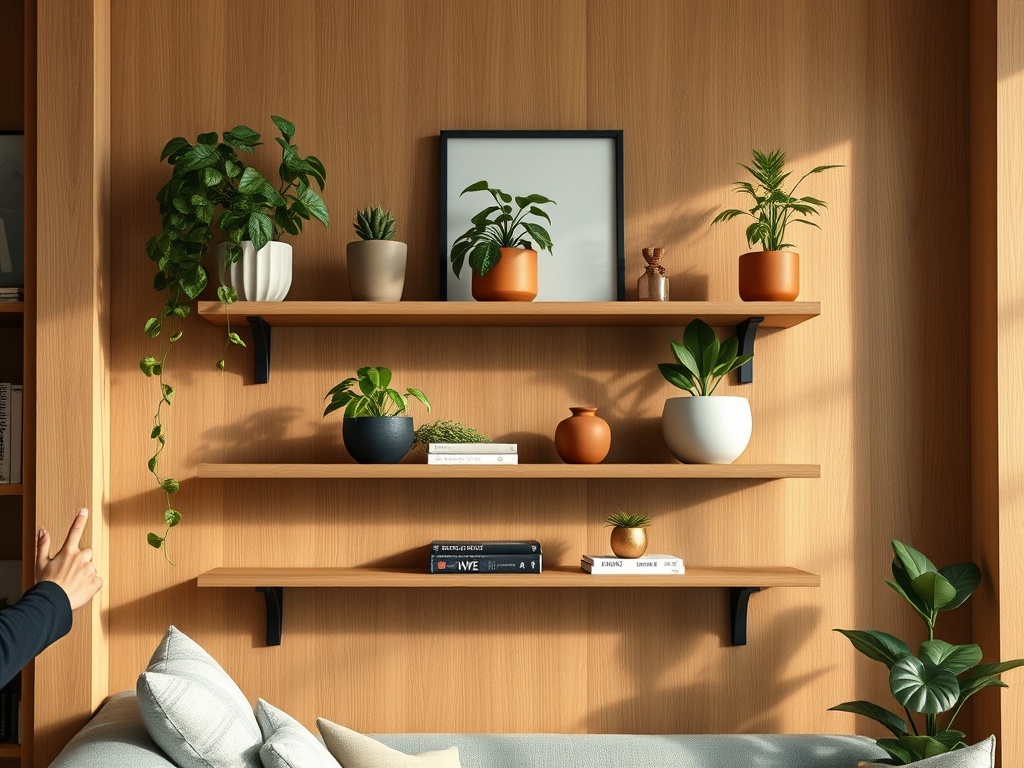

The best shelf plants are not simply the smallest or trendiest houseplants. They are plants whose mature size, light needs, watering habits, growth form, and safety profile fit the exact shelf and household where they will live.
TL;DR: Start with the shelf, not the plant. Measure usable height and depth, judge the light at the shelf itself, decide whether you want trailing or upright growth, and choose a pot with drainage. Pothos and heartleaf philodendron are forgiving trailing choices for many homes, peperomia suits compact shelves, spider plants offer arching texture, and ZZ plants tolerate relatively dim positions. Pet owners should check each species before buying.
Let the Shelf Conditions Make the First Cut
A plant can look perfect at the garden center and struggle once it is placed several feet from a window. N.C. Cooperative Extension explains that indoor light intensity drops quickly as distance from a window increases. That makes the actual shelf position more useful than a room label such as “bright living room.” Observe the shelf at different times of day and note direct sun, reflected light, nearby lamps, heating vents, and drafts.
Depth matters too. A shallow floating shelf may only suit a small nursery pot inside a lightweight cachepot, while a deep bookcase can support a broader planter. Leave space above the foliage so growth does not press into the shelf above. For trailing plants, check that vines will not hang into a walkway, television screen, radiator, candle, or curious pet’s reach.
If the shelf is genuinely dark, choose a plant known to tolerate lower light or add a suitable grow light. “Low light” does not mean “no light.” Slow growth, long gaps between leaves, leaning stems, and fading variegation can all indicate that a plant needs a brighter position.
A Practical Shortlist by Look and Use Case
| Plant | Best fit on a shelf | Light flexibility | Growth habit | Main watch-out |
|---|---|---|---|---|
| Pothos | Easy trailing greenery | Good tolerance of lower indoor light | Cascading vines | Toxic if chewed by cats or dogs |
| Heartleaf philodendron | Soft trailing or climbing look | Adapts to many indoor positions | Vining | Toxic if chewed by pets |
| Peperomia | Small shelves and grouped displays | Usually prefers medium indirect light | Compact to lightly trailing | Do not keep constantly wet |
| Spider plant | Higher shelves where leaves can arch | Medium light is ideal | Arching leaves and plantlets | Needs enough width for its spread |
| ZZ plant | Clean upright form on deeper shelves | Handles lower light well | Upright stems | Toxic if chewed by pets |
This is an editorial comparison, not a ranking. The “best” choice depends on your light, available space, watering habits, and whether children or pets can reach the plant.
Best for an inexpensive first shelf plant: pothos
Pothos is widely available, grows into a full trailing shape, and tolerates the occasional missed watering better than many moisture-loving plants. It is especially useful when you want foliage to soften the edge of a bookcase or media unit. Variegated forms usually show their pattern best in brighter indirect light.
There is one important household consideration: the ASPCA lists golden pothos as toxic to cats and dogs. A high shelf is not automatically pet-proof if vines eventually reach the floor, so trim or relocate growth when needed.
Best for a compact shelf: peperomia
Peperomias come in many leaf shapes and colors but generally stay more compact than vigorous vines. They work well where the shelf has limited height or where you want a plant to sit beside books, ceramics, or framed objects without taking over the arrangement. Their fleshy leaves also make them easy to visually distinguish from fine-textured ferns.
For pet-aware homes, species choice still matters, but the ASPCA lists blunt-leaf peperomia as non-toxic to cats and dogs. That does not make any plant a chew toy; it simply reduces one specific toxicity concern for this species.
Best for an airy silhouette: spider plant
Spider plants create movement without requiring vines to be trained. The leaves arc outward, and mature plants may produce hanging plantlets. They suit a high shelf or plant stand better than a narrow cubby because the foliage needs room to spread. A plain pot keeps the display from looking visually crowded.
Best for low-maintenance upright structure: ZZ plant
A ZZ plant gives a shelf a more architectural silhouette than trailing plants. It is useful on deeper shelves and in rooms where watering is easy to forget. Its water-storing rhizomes mean soggy soil is a bigger risk than a short dry spell. Keep it out of reach of pets and children who may chew plant material.

Match the Pot to the Furniture as Carefully as the Plant
Plant styling can fail because of the container rather than the plant. A decorative pot without drainage can hide excess water around the roots, while a planter that is too heavy can stress a shelf. The simplest setup is often a plastic nursery pot with drainage placed inside a decorative cachepot. Remove the inner pot to water, let it drain, then return it once excess water has stopped dripping.
Use a saucer or liner where moisture could damage wood, veneer, painted shelves, or books. Check the manufacturer’s load rating for wall-mounted shelves before adding large ceramic pots, wet potting mix, stones, or multiple plants. For readers building a more functional indoor growing area rather than a purely decorative shelf, seed-starting equipment can help you decide when lighting, trays, and shelving are worth buying.
Build a Watering Routine Around the Plant, Not the Calendar
Shelf plants often dry at different rates even when they share a room. Pot size, potting mix, light, airflow, foliage mass, and season all change water use. Check the potting mix before watering, then water thoroughly when the plant actually needs it. Empty standing water from decorative containers.
If you travel regularly, choose plants and setups that fit that lifestyle instead of relying on last-minute overwatering. The guide on watering houseplants while you travel covers sitters, wicks, capillary systems, and pre-trip testing. For outdoor plants, nutrient decisions follow a different rhythm; the beginner fertilizing FAQ explains why soil conditions and plant growth stage matter more than a universal feeding schedule.
Style in Odd Numbers but Keep Plant Health in Charge
A group of three objects often looks balanced on a shelf, but three living plants can also create a maintenance problem if they need very different conditions. A better approach is to mix one plant with non-living objects, or group plants that share similar light and moisture preferences. Keep foliage away from hot bulbs, fireplaces, and HVAC vents.
Rotate pots occasionally if one side consistently faces the light. Dust broad leaves gently so they can receive available light, and prune trailing growth when it begins to overwhelm nearby objects. If a plant repeatedly stretches toward the window, loses color, or stays wet for long periods, treat that as a placement problem rather than a styling problem.
Choose the Plant That Fits Your Real Room
A successful shelf plant should look good after six months of ordinary care, not only on the day it is purchased. Start with light, space, drainage, and household safety, then choose the growth habit that supports your design. If two plants are equally attractive, the one that better matches your routine is usually the more durable choice.
Use this shortlist as a starting point, then confirm the care and toxicity information for the exact species or cultivar you bring home.
Home and garden information is provided for general educational purposes. Plant care varies with species, home conditions, climate, and product instructions; consult a qualified horticultural or veterinary professional when specific safety guidance is needed.[/