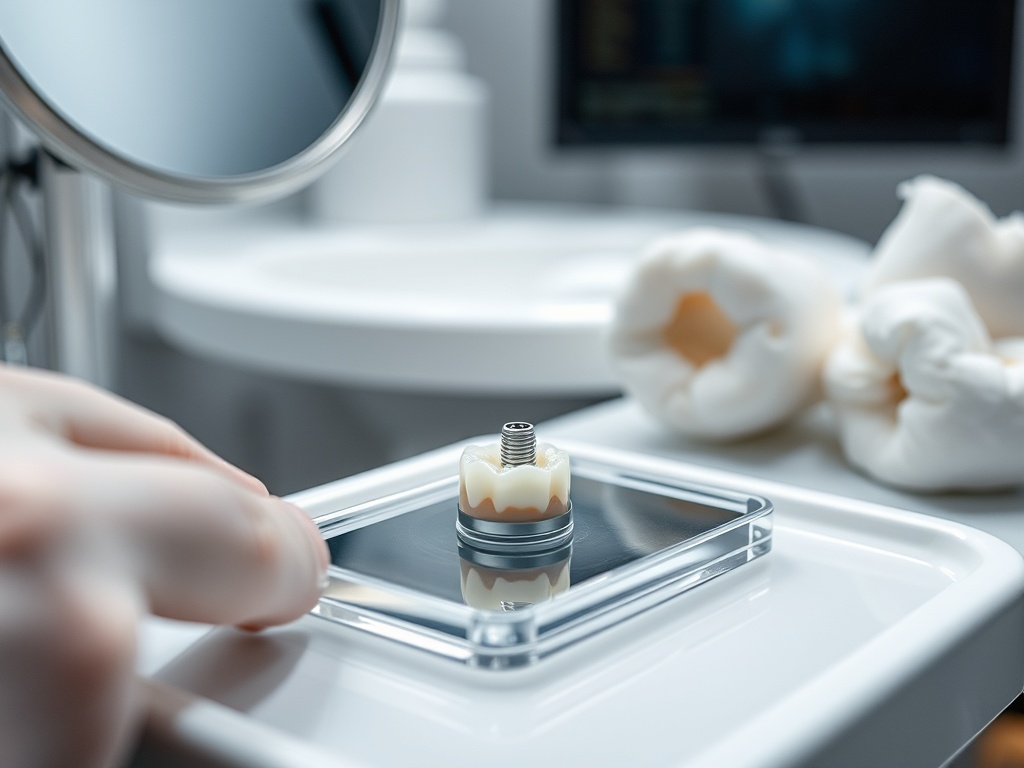

Lost Implant Crown or Bridge: Is It an Emergency?
A lost implant crown or bridge is usually urgent dental care, not always a hospital emergency. Call your dentist promptly, protect the loose part, avoid chewing on that side, and seek same-day help if there is pain, swelling, bleeding, trauma, or the bite no longer closes normally.
First Response Guide
TL;DR: Save the crown, bridge, or screw if you can find it. Do not glue it back. Do not chew on the exposed implant parts. Contact the dental office, describe symptoms, and ask how quickly you should be seen.
The difference between urgent and emergency depends on symptoms and risk. A crown that pops off without pain still needs evaluation because exposed parts can loosen, wear, or collect bacteria. A bridge that breaks and changes your bite can overload nearby implants or natural teeth. Swelling or fever points to a different level of concern.
Because implant restorations involve multiple components, a repair is not just about replacing a cap. The dentist needs to determine whether the crown cement failed, a screw loosened, porcelain fractured, the abutment moved, or the implant itself is involved.
Why an Implant Crown or Bridge Can Come Loose
Dental implants commonly support crowns, bridges, or dentures. Cleveland Clinic's dental implant overview describes an implant as a post in the jawbone that can support an artificial tooth through an abutment and restoration. When the visible tooth portion comes loose, the underlying cause can vary.
Possible causes include:
- Cement washout around a cement-retained crown.
- A loose screw in a screw-retained crown.
- Porcelain or ceramic fracture.
- Bite forces from grinding or clenching.
- Wear or fracture of the abutment.
- Food trapping or inflammation around the restoration.
- Trauma or biting into a hard object.
Some problems are simple repairs. Others require new parts, new imaging, bite adjustment, or evaluation by the dentist who placed or restored the implant.
What to Do in the First Hour
Start by finding and saving every piece. Place it in a small bag or container. If you see a tiny screw, save that too. Rinse your mouth gently with warm water. If a sharp edge irritates your tongue or cheek, ask the dental office whether orthodontic wax is appropriate until you are seen.
Avoid these steps:
- Do not use super glue or household adhesive.
- Do not bite the crown back into place.
- Do not chew on the exposed side.
- Do not keep wearing a loose bridge if it rocks or feels unsafe.
- Do not ignore a change in your bite.

Cleveland Clinic includes a lost or broken dental restoration among dental emergencies that should be evaluated by a dentist as soon as possible, and specifically warns against using super glue for a broken crown or bridge.
Warning Signs for Lost Implant Crown Bridge
| Situation | Likely care level | What to do |
|---|---|---|
| Crown off, no pain, implant part feels stable | Prompt dental appointment | Call, save the crown, avoid chewing there |
| Loose bridge, bite feels high or uneven | Same-day dental advice | Stop using it and ask whether urgent repair is needed |
| Broken piece cuts tongue or cheek | Same-day dental care | Protect tissue and call for instructions |
| Swelling, pus, fever, or spreading pain | Urgent dental or medical care | Call the dentist; use emergency care if symptoms spread |
| Injury to jaw, face, or uncontrolled bleeding | Emergency care | Go to an emergency department or urgent facility |
If dental anxiety makes you hesitate, planning sedation may help, but it changes logistics. Read why you may need an escort after dental sedation before arranging a sedated repair appointment.
How a Dentist May Repair It
The repair depends on the design. A cement-retained crown may be cleaned, checked for fit, and recemented if the crown and implant components are healthy. A screw-retained crown may need the screw channel opened, the screw tightened or replaced, and the access sealed. A fractured crown may need replacement. A bridge may require more extensive work because it spreads force across multiple supports.
Cleveland Clinic's dental crowns guide explains that crowns can cover implants, while its dental bridges guide explains how bridges replace missing teeth. Implant-supported versions add another layer because the implant, abutment, screw, and prosthetic teeth must all work together.
If the restoration keeps loosening, the dentist may evaluate your bite, night grinding, fit, cement choice, screw access, or whether the restoration design distributes force well. Recementing the same crown again and again without identifying the cause may not solve the problem.
Preventing a Repeat Problem
Prevention focuses on maintenance and force control. Keep regular implant checks. Clean around the crown or bridge as instructed. Tell the dentist if floss shreds, food packs around the restoration, the bite feels different, or the crown clicks.
If you grind at night, ask whether a guard is appropriate. If cost is the reason you delay repair, review cosmetic dentistry financing questions with caution. Implant repairs may be restorative, cosmetic, or both depending on the situation and plan.
Certain medications or medical conditions can affect surgical planning if more treatment is needed. For example, patients facing extractions or oral surgery should understand tooth removal while taking blood thinners before changing any medicine.
Questions About Lost Implant Crown Bridge
For Lost Implant Crown Bridge, this part of Questions About Lost Implant Crown Bridge focuses on the symptom history, previous treatment, current medicines, and the result the patient values most before treatment is scheduled, with the same details verified when the follow-up plan is written. The clinician should also explain which examination finding supports each recommendation and what information could change it for Lost Implant Crown Bridge when a second opinion is considered, using the examination and health history rather than a general assumption.
Clinical Checks for Lost Implant Crown Bridge
For Lost Implant Crown Bridge, this part of Clinical Checks for Lost Implant Crown Bridge focuses on confirmed findings, measurements, imaging, and health-history factors when maintenance is discussed, with the same details verified when the follow-up plan is written. The clinician should also explain what remains uncertain and whether another test or specialist opinion would alter the plan for Lost Implant Crown Bridge during the initial review, using the examination and health history rather than a general assumption. Recording that explanation gives the patient a clearer next step for Lost Implant Crown Bridge when maintenance is discussed, especially when follow-up duties are reviewed when the follow-up plan is written.
Protect the Implant System, Not Just the Tooth Shape
A missing implant crown or bridge may not feel painful, but it is still a structural problem. The safest next step is to call the dental office, describe what came off, save the parts, and avoid chewing on the area. Same-day care is wise when pain, swelling, a sharp edge, or a bite change is present.
The goal is to protect the implant system and surrounding tissue, not simply make the tooth look whole again. Prompt evaluation gives the dentist the best chance to repair the restoration before a small problem becomes a larger one.
Cost Planning for Lost Implant Crown Bridge
For Lost Implant Crown Bridge, this part of Cost Planning for Lost Implant Crown Bridge focuses on an itemized estimate that separates diagnosis, temporary care, laboratory work, treatment, and follow-up while comfort and function are assessed, with the same details verified when the follow-up plan is written. The clinician should also explain insurance assumptions, payment timing, and later maintenance expenses for Lost Implant Crown Bridge while recovery expectations are clarified, using the examination and health history rather than a general assumption.