
To store artworks safely at home, keep them clean, supported, dry, stable, and protected from light, pests, pressure, and handling damage. The best home storage system uses archival materials, moderate conditions, and careful separation between paper, canvas, and mixed media.
Home Art Care Overview: Most damage comes from preventable risks: sunlight, humidity swings, acidic backing boards, tape, leaning stacks, dirty hands, damp basements, hot attics, and pressure from crowded storage.
Think Like a Conservator Before Buying Supplies
Safe storage begins with risk, not shopping. Ask what could harm the work: light, water, pests, pressure, dust, chemical reactions, mold, heat, poor framing, or careless handling. Different materials respond differently. Works on paper are vulnerable to creasing, acidity, light, and moisture. Canvas works need support against punctures, sagging, and abrasion. Mixed media may include unstable adhesives, collage elements, plastics, textiles, photographs, or found objects that react unpredictably.
The Library of Congress advises careful handling and storage for works on paper, while the Canadian Conservation Institute explains that paintings should be kept in a secure and stable environment in its storage and display guidance. Those museum principles can be scaled down for home collections.
Choose the Right Room First
Avoid basements, attics, garages, laundry rooms, kitchens, and bathrooms when possible. These spaces often have humidity swings, heat, water risks, insects, or airborne grease. A closet in a living area is often safer than a large storage room with unstable conditions.
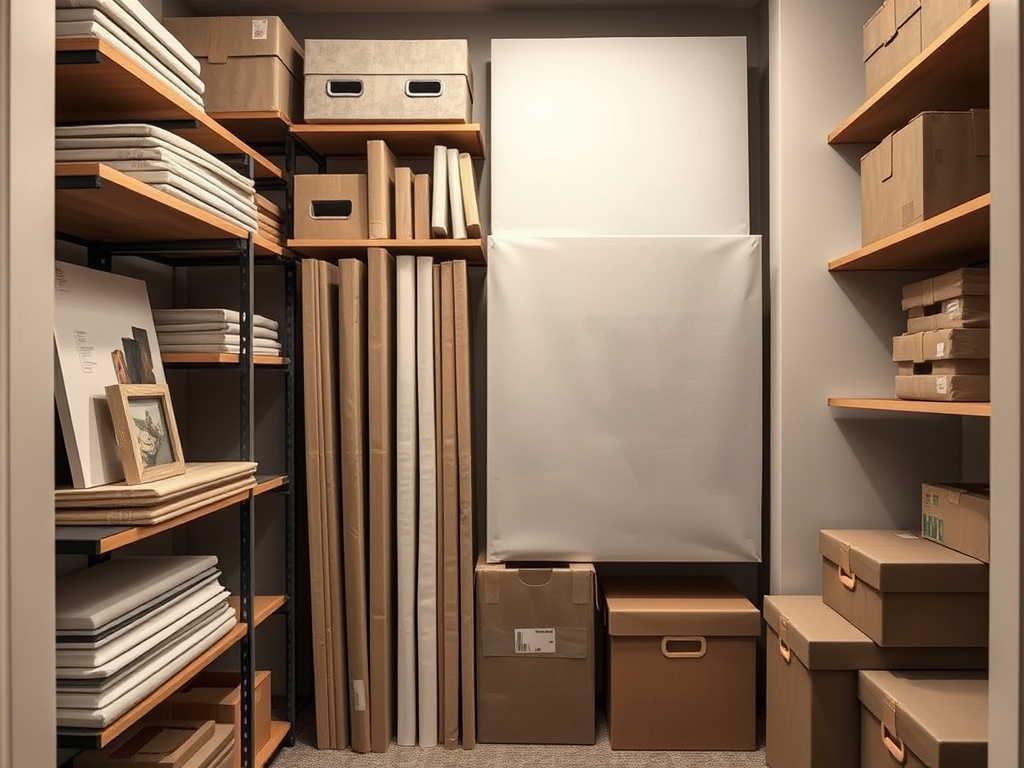
Look for a space that is clean, dark, dry, and away from vents or exterior walls. Do not store art directly on the floor. Use shelves, flat files, archival boxes, or raised racks. If water enters the room, even a few inches of elevation can reduce damage.
Store Works on Paper Flat When You Can
Unframed drawings, prints, photographs, posters, and documents are usually safest flat in archival folders or boxes. Use acid-free, lignin-free folders and interleaving paper when appropriate. Avoid plastic sleeves unless you know the material is safe for that artwork. The Canadian Conservation Institute notes in its works-on-paper storage guidance that polyester film can be useful for some paper objects but is not recommended for media that may offset, such as charcoal, pastel, chalk, or watercolor.
Never use pressure-sensitive tape to repair tears. Even “archival” tape can cause long-term issues if used incorrectly. If a work has tears, flaking media, mold, water damage, or sticky residues, isolate it and consult a conservator.
Support Canvas Works Without Crushing Them
Canvas paintings should not be stacked face-to-face or face-to-back without protection. Leaning canvases in a crowded pile can create pressure points, stretcher bar marks, punctures, and abrasion. If canvases must be stored upright, keep them vertical, supported, and separated with rigid boards or padded dividers. The face of the painting should not rub against another surface.
Do not wrap canvas tightly in plastic for long-term storage. Trapped moisture can encourage mold. Breathable protection and stable conditions are safer. For valuable or fragile paintings, a backing board, proper framing, and professional advice may be worth the cost.
Treat Mixed Media as the Most Sensitive Category
Mixed media is complicated because one piece may contain paper, paint, glue, thread, metal, plastic, wood, ink, photographs, and found objects. Each material ages differently. Adhesives can fail. Plastics can deform. Metal can corrode. Organic materials can attract pests.
Store mixed media with extra space around protruding elements. Do not flatten dimensional pieces to fit a box. Photograph the work before storing it, including close-ups of fragile areas, so you can monitor changes. If the work has loose parts, make a note rather than trying to reattach them with household glue.
Readers who make or sell digital and physical art products may also want to review how to sell digital prints, downloads, and asset packs legally, especially when deciding what should be sold as a reproduction versus preserved as an original.
Use a Simple Home Storage Table
| Artwork type | Best home position | Avoid | When to get help |
|---|---|---|---|
| Works on paper | Flat in archival folders or boxes | Rolling, tape repairs, sunlight, acidic mats | Tears, mold, water damage, friable media |
| Canvas paintings | Upright with dividers or properly framed | Face-to-face stacking, tight plastic wrap | Flaking paint, loose canvas, punctures |
| Mixed media | Custom support with space around elements | Compression, heat, unstable adhesives | Loose parts, corrosion, unknown materials |
| Framed art | Vertical on padded supports | Leaning glass against glass, damp walls | Broken glazing, warped frame, insect signs |
Control Light During Display and Storage
Storage should be dark. Display should be thoughtful. Sunlight can fade pigments, yellow paper, and heat surfaces. UV-filtering glazing helps, but it does not make a work immune to light damage. Rotate sensitive works off display and avoid hanging them near bright windows.
If you are building a personal art collection alongside books, comics, or printed ephemera, the same environmental habits apply. The guide to submitting a mini comic or zine to small press festivals can help creators understand why physical presentation and storage matter before work reaches readers.
Make Handling Rules Easy to Follow
Wash and dry hands before handling most paper. Use clean gloves when appropriate, especially for photographs or very sensitive surfaces, but remember that gloves can reduce touch sensitivity and cause accidental tears if used clumsily. Support paper with both hands or a rigid board. Move one artwork at a time. Keep food, drinks, pens, and pets away from the work area.
Label storage boxes clearly, but do not write directly on artwork or original backing. Keep a simple inventory with title, artist, date, medium, dimensions, condition notes, and storage location. Add photographs for identification.
A Safe Result Should Look Boring
Good storage is not dramatic. It looks clean, calm, and uneventful. Nothing is bending, sweating, fading, sticking, rubbing, or leaning under stress. The room does not smell musty. Boxes are not overloaded. Works can be retrieved without moving a dangerous stack.
A Care Routine for Long-Term Confidence
Check stored artworks twice a year. Look for pests, moisture, new stains, warping, flaking, odors, or changes in supports. Fix the storage environment before damage spreads. When a piece is valuable, fragile, sentimental, or already damaged, contact a professional conservator rather than experimenting with home repairs.